


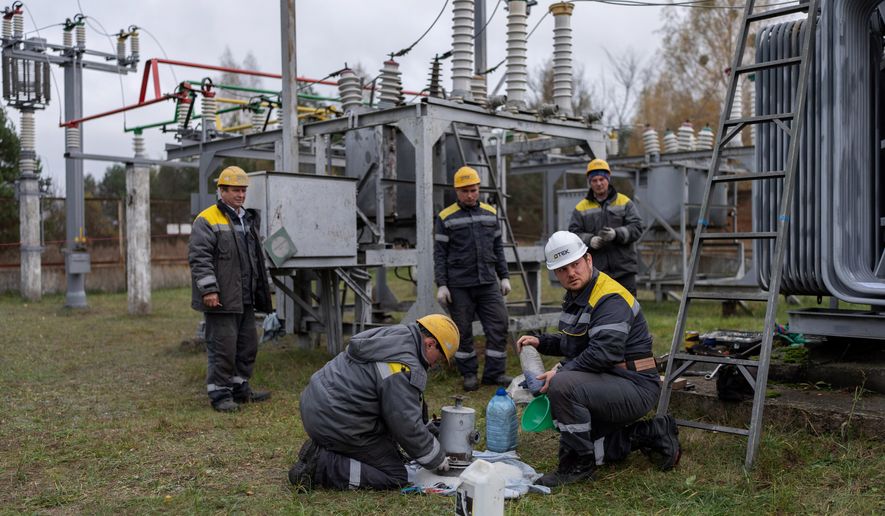

Russia launched a wave of attacks in central Ukraine overnight, killing at least four people and striking critical energy infrastructure sites — part of what analysts say is Moscow’s strategy to instigate a humanitarian crisis over the winter.
The strikes came after U.S. and Ukrainian officials wrapped up a third day of talks in Florida aimed at ending the war.
Ukrainian President Volodymyr Zelenskyy said Saturday that “Ukraine is determined to keep working in good faith with the American side.”
On Saturday at the Reagan National Defense Forum in California, President Trump’s outgoing Ukraine envoy, Keith Kellogg, said efforts to end the war were in “the last 10 meters.”
Leaders of Britain, France and Germany are expected to join a meeting with Mr. Zelenskyy in London on Monday.
Russian troops fired missiles and drones Saturday in a combined strike at energy facilities in Ukraine’s Poltava area, said Volodymyr Kohut, acting head of the Poltava military region.
“Direct hits and falling debris caused fires. Technical equipment was damaged,” Mr. Kohut posted late Saturday on Telegram. “There was no information about casualties. Due to the attack, there are interruptions in the heat and water supply in some areas of the community.”
French President Emmanuel Macron said Saturday night’s attacks are the latest indication that Russia seems to be interested more in escalating the conflict in Ukraine than seeking a peaceful resolution.
“I firmly condemn the massive strikes that targeted Ukraine last night, particularly its energy and railway infrastructure,” Mr. Macron said Sunday. “We must continue to exert pressure on Russia to compel it to choose peace.”
Russia fired at least 241 attack drones of various types and five ballistic missiles. Kyiv suppressed or shot down 179 of them with its aviation, electronic warfare and air defense assets, Ukrainian air force officials said.
“Practically every day and every night, our emergency services are dealing with the consequences of Russian bombardments of peaceful Ukrainian cities and communities,” Mr. Zelenskyy said Sunday in a statement. “The main targets of these attacks are infrastructure that supports normal life.”
More than a dozen targets in Ukraine were hit in Saturday’s attack. Russia seems to be accelerating its concentrated deep strike campaign against Ukraine’s energy platforms. The Kremlin has fired 5,000 attack drones every month since September, British officials said on Saturday.
“Daily reliance on large numbers of cheap, mass-produced [drones], both armed and decoy, is indicative of Russia’s attritional approach to the conflict, and affords Ukraine minimal respite,” British military officials posted on X in their latest assessment of the conflict. “Launch rates are regularly limited by adverse weather conditions and geopolitical considerations. However, lulls are often followed by peaks as perceived conditions improve.”
• Mike Glenn can be reached at mglenn@washingtontimes.com.

Please read our comment policy before commenting.