



OPINION:
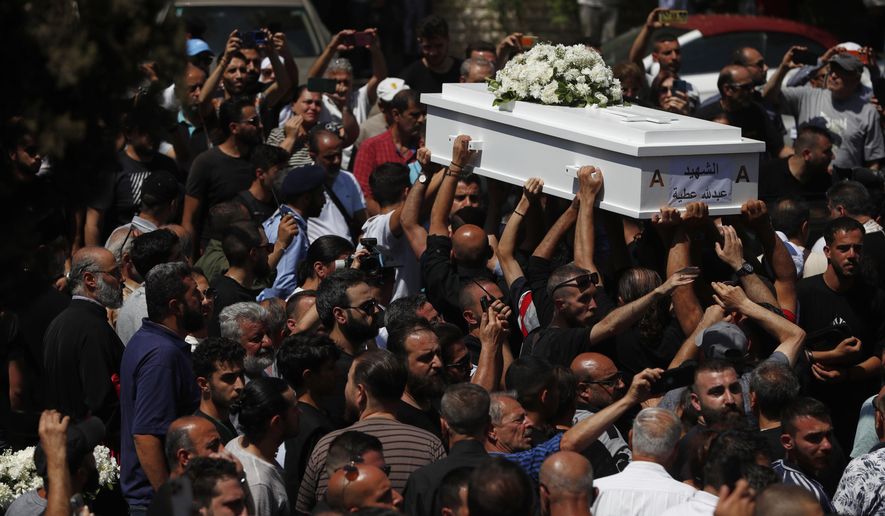
On June 22, a suicide bomber walked into the ancient Greek Orthodox Mar Elias Church in Damascus, Syria, during evening prayers and detonated an explosive vest, leaving 22 people dead and 63 wounded.
The attack hardly registered in mainstream media. It was treated as yet another tremor in a region long scarred by conflict. A once-vibrant Christian community of more than 2 million, about 10% of Syria’s population before 2011, has now dwindled to roughly 300,000, less than 2% of Syrians today. The world looks away while one of the oldest Christian populations on earth is being ruthlessly erased.
Religious persecution isn’t just a “Christian issue.” It’s a human rights crisis that should pierce the heart of anyone who cares about justice and human dignity.
Across major outlets, reports soften the horror. They speak of “clashes,” “displacement” or “unrest.” Only rarely does anyone name this persecution for what it truly is. When a massacre is described as a “skirmish” or a deliberate campaign of violence is called a “conflict,” the victims are robbed of dignity, and truth itself is distorted.
This is not about semantics. It’s about how media framing shapes moral perception and how, in this moment, Christians and citizen-journalists alike must demand honesty from the storytellers of our age.
Such euphemisms are part of a persistent pattern. Mainstream outlets routinely ignore or misrepresent stories of persecution that matter to anyone who values human rights and freedom. As the Lemkin Institute for Genocide Prevention has documented, Western media repeatedly downplayed the forced displacement of 100,000 Armenian Christians from Nagorno-Karabakh, even as other conflicts commanded urgent coverage and global outrage.
When we accept the media’s narrative that faith is irrelevant, that believers deserve suspicion and that persecution is just another political story, we surrender the truth and forsake our calling to defend the oppressed.
The wider truth is sobering: Global persecution of Christians and other religious minorities is growing, while media coverage remains uneven at best. A recent analysis found that stories of Christian persecution accounted for only about 2% of headlines in mainstream newsrooms.
More than 380 million Christians worldwide live in situations of “high levels of persecution and discrimination.” That’s roughly the entire population of the United States, plus California a second time, all living under serious threat because of their faith. Think about that: hundreds of millions facing violence, imprisonment or discrimination, and only a sliver of that reality ever reaches news sites.
When the scale of suffering is that vast and the media spotlight that dim, the story of human rights itself is being rewritten and truth is losing its voice.
We have seen some hopeful turns. Last month, National Religious Broadcasters joined dozens of top Christian leaders in signing a letter delivered to President Trump’s desk urging the administration to redesignate Nigeria as a country of particular concern, and we are grateful that the president has acted.
Nigeria accounted for nearly 69% of all faith-related Christian killings worldwide last year. The administration has sent a clear message that America will not turn a blind eye to religious persecution and will once again stand with those suffering for their faith.
This moment in history presents something unique. Thanks to the unprecedented availability of media platforms, anyone with a story or camera can bypass traditional gatekeepers. The age of top-down editorial control is fading; we now have the tools to shine light into dark places, hold power to account and give voice to the forgotten.
For those who believe in truth, justice and the dignity of every human being, this is the time to stand up and speak out.
First, we can no longer be content with media voices that overlook or flatten the stories of flagrant human rights abuses. When acts of faith-based violence or repression go underreported, it’s not only believers who lose, but also the public’s understanding of reality. The answer is not to abandon mainstream media but to demand their commitment to rigorous reporting, clear language and the willingness to truly confront the evils of our day.
Second, we can champion independent voices, journalists, nonprofits and storytellers who pursue truth with integrity and courage. Faith-based media have a vital role to play, but so do secular reporters who refuse to look away. Each has a part in restoring depth and accuracy to our shared information culture.
Third, all of us, audiences and editors alike, must hold ourselves to a higher standard of media accountability. It’s not enough to consume the news; we must question it. What perspectives are missing? Whose suffering is reduced to statistics? Are faith communities represented as part of the human story, or written out of it entirely?
These questions matter because the way stories are told shapes how people act. Imagine a media culture where reporters of every background abandon euphemism and name evil wherever it arises. That’s the kind of journalism our world needs.
I’m not calling for the rejection of mainstream media. Many reporters already do this work with courage and compassion. I’m calling for partnership: a shared pursuit of truth that honors every human being’s inherent worth.
Journalistic excellence must ultimately be measured by how well our stories give voice to the voiceless, name injustice and honor the dignity of every person.
To those who read, share and support these stories, this is your moment to lift them higher. Use the platforms you have. Shine light into dark places. Let silence give way to truth.
Do not be a spectator of media failure, but a participant in the story of justice.
• Troy A. Miller is president and CEO of the National Religious Broadcasters.

Please read our comment policy before commenting.