


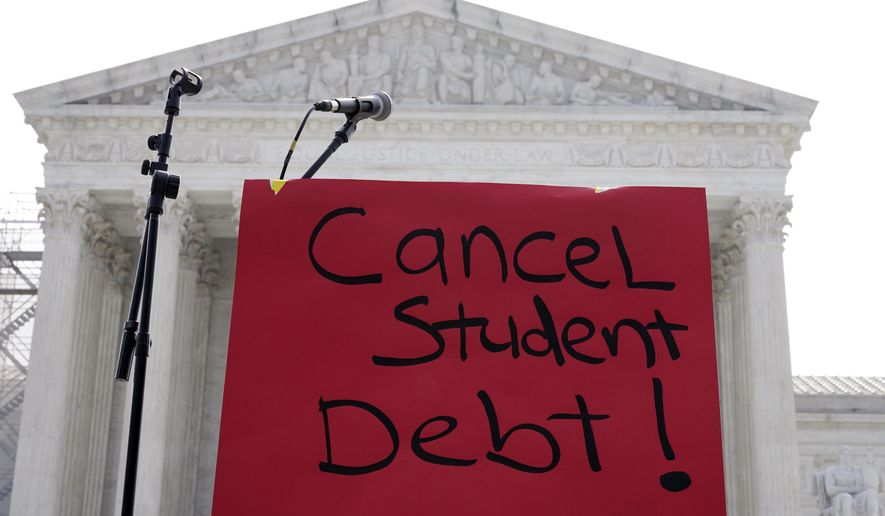

The Trump administration says it will kick off the new year by garnishing the wages of people who are delinquent on student loan repayment, reversing Biden-era leniency.
The Education Department said it plans to send garnishment notices to 1,000 defaulted borrowers during the week after Jan. 7, and “notices will increase in scale on a month-to-month basis.”
The administration’s decision to garnish wages is a part of a major pivot away from the Biden administration’s push to cancel student debt or give borrowers leeway as part of an extended pandemic-related pause.
The Trump administration resumed collections on defaulted student loans in May. The government had not collected on defaulted loans since March 2020, when the coronavirus tore across the U.S.
At the time, the Trump administration said the Biden administration left borrowers in confusing limbo by rolling out forgiveness plans even as Congress required the resumption of payments as of October 2023.
“American taxpayers will no longer be forced to serve as collateral for irresponsible student loan policies,” said Education Secretary Linda McMahon. “The Biden administration misled borrowers: the executive branch does not have the constitutional authority to wipe debt away, nor do the loan balances simply disappear.”
Wage garnishment is a legal procedure in which a person’s earnings are withheld, under a court order, to satisfy a debt such as child support or, in this instance, a college loan.
More than 5 million Americans are considered in default, meaning they have not made a payment in more than 270 days. The government can recoup payment by withholding tax refunds or federal benefits, such as Social Security, or resort to wage garnishments of up to 15% of someone’s pay.
The Trump administration says collections through the Office of Federal Student Aid are legally required by the Higher Education Act of 1965 and the Debt Collection Improvement Act of 1996.
The Education Department said it only takes collection actions after borrowers “have been provided sufficient notice and opportunity to repay their loans.”
Protect Borrowers, a nonprofit that focuses on borrowers’ rights, said the garnishment decision would harm people reeling from “stagnant wages” and high prices for everyday goods and services.
“This administration’s decision to garnish wages from defaulted student loan borrowers is cruel, unnecessary, and irresponsible,” said Protect Borrowers Deputy Executive Director and Managing Counsel Persis Yu. “As millions of borrowers sit on the precipice of default, this administration is using its self-inflicted limited resources to seize borrowers’ wages instead of defending borrowers’ right to affordable payments.”
Student loan repayment turned into a political football after the pandemic emergency ended.
Conservatives said borrowers assumed the risk of pursuing lofty — and expensive — university degrees that may or may not translate into lucrative jobs. They said it was unfair to expect American taxpayers to absorb their debt, particularly blue-collar workers who chose not to attend college or couldn’t afford it, and did not want to take on debt.
The Biden administration leaned into student loan forgiveness, a move that is popular among young people and college-educated people who are a key part of the Democratic base.
President Biden tried to cancel up to $20,000 of student debt for low- and middle-income borrowers, though the Supreme Court declared the move unconstitutional.
Mr. Biden pivoted to alternatives, such as moves that canceled student debt for thousands of public-sector workers under a 2007 program created by President George W. Bush.
All told, Mr. Biden extended debt relief of more than $175 billion for nearly 5 million people, or roughly 11% of the active federal student debt at the end of his term.
• Tom Howell Jr. can be reached at thowell@washingtontimes.com.

Please read our comment policy before commenting.