



Syria is one step closer to sanctions relief this week after the U.S. House passed the National Defense Authorization Act with a provision to repeal the Assad-era Caesar Act, and advocates are excited.
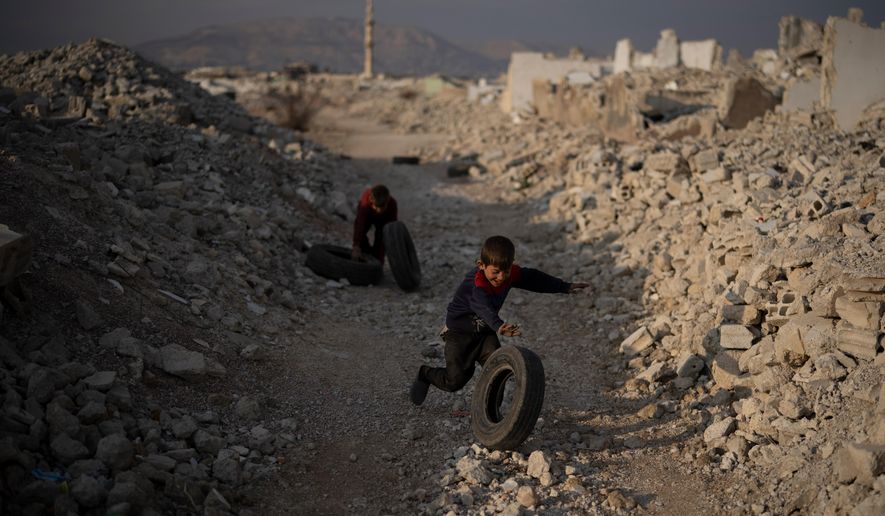
Pro-Syrian organizations, which lobbied Congress for months to repeal the Caesar Act sanctions, say ending the punishment will give the Mideast government a real chance to rebuild following a devastating civil war.
“Our Syrian American community is elated that the NDAA has passed with the Caesar sanction repeal included and they are grateful to all those who helped bring the events to fruition. Syria now has a chance to open its investment channels and rebuild,” Suzanne Meriden, executive director of the Syrian American Council, told The Washington Times.
The massive defense spending bill, which passed with a 312-112 vote on Wednesday, still must pass the Senate before it gets to President Trump’s desk.
The Caesar Act sanctions were signed into law by Mr. Trump in 2019 to economically pressure the Bashar Assad-led government of Syria.
The same Syrian advocacy organizations now calling for sanctions relief actually led the charge to impose the Caesar Act sanctions six years ago.
But advocates insist that the sanctions have outlived their usefulness after the fall of the Assad government in December 2024.
“It reflects an understanding that sanctions are a tool, and this tool is to be used when necessary,” Joud Monla-Hassan, director of Citizens for a Secure and Safe America, said of the House vote. “But now that the context is different, we think truly that Syria deserves a chance to recover and move forward after decades of the Assad regime’s cruelty.”
Importantly, the provision passed by the House requires the White House to issue regular reports concerning Damascus’ efforts to combat extremism and protect the rights of religious and ethnic minorities in Syria. If Damascus is uncooperative, the White House could impose targeted sanctions in return.
Indeed, some advocacy organizations and lawmakers have expressed skepticism around Syria’s new leader, President Ahmad al-Sharaa, and his treatment of minorities since taking office late last year.
Syrian government forces have clashed with Alawite, Christian, Kurdish and Druze minority members this year, leading to thousands of deaths. The ethnic clashes have led some advocates to call for only the conditional removal of sanctions.
“We support Congress’ decision to condition sanctions relief upon the new government acting to: protect human rights and minorities; ensure equitable representation for all Syrian communities and inclusive governance based on equal citizenship; remove extremist and jihadist elements from government and military positions; hold accountable perpetrators of violence against minority groups such as the Alawites, Christians and Druze,” the Alawites Association of the United States wrote in a statement.
Mr. al-Sharaa was once the leader of an al-Qaida affiliate organization in Syria fighting the Assad regime, inflaming skepticism among minorities and lawmakers.
However, Mr. al-Sharaa has ordered investigations into the killings of Druze and Alawite minority members by government forces, and the judiciary is holding trials on the hundreds of people found to have committed atrocities.
• Vaughn Cockayne can be reached at vcockayne@washingtontimes.com.

Please read our comment policy before commenting.