



OPINION:
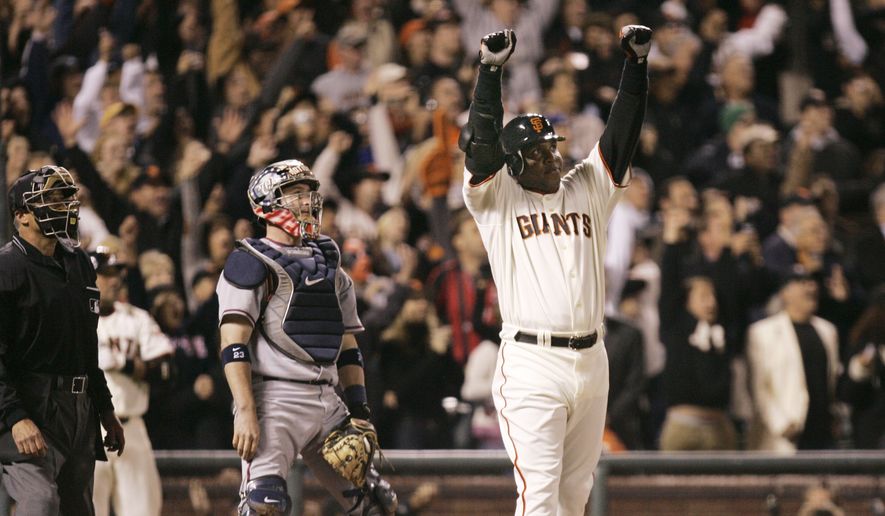
The burying of Barry Bonds and Roger Clemens on the latest Baseball Hall of Fame ballot has set off the Cheated Generation, who are expressing outrage at the injustice of cheaters being denied the game’s greatest tribute.
The 16-member contemporary era committee has emphatically denied Bonds and Clemens entry into Cooperstown, just as baseball writers did for the 10 years the two tainted stars were on the ballot.
Ironically, second basemen Jeff Kent — Bonds’ San Francisco Giants teammate — did get elected, receiving 14 of 16 votes. Candidates need at least 12 votes for the 75% minimum. Kent’s offensive numbers benefited from Bonds’ bloated presence in the Giants lineup.
In terms of outrages, this pales in comparison to the notion of Bonds and Clemens being enshrined for their cheating.
Neither one of them got even five votes, which means we won’t have to go through this exercise again until 2031. Maybe by then the Cheated Generation will have convinced enough people with phony indignity to finally twist the narrative in favor of their fallen heroes.
Steroids have been banned in baseball since 1991, when Commissioner Fay Vincent sent a memorandum to all teams shortly after the federal government made them illegal without a prescription.
Bonds, who hit 73 home runs in 2001, the most recorded in a single season — 24 more than he had ever had in a single season before in his 15-year career. He finished his career in 2007 with the most home runs recorded in history with 762.
He also admitted in 2003 in grand jury testimony in the BALCO laboratories investigation that he took steroids, claiming he was unaware of what he took.
Bonds would be charged with numerous offenses, including perjury and obstruction of justice. A jury in 2011 deadlocked on three perjury charges and the judge declared a mistrial. Talking to reporters after the trial, jurors said they believed Bonds had been deliberately evasive in response to questions about whether he had ever been injected with banned drugs. “He was evasive throughout his testimony,” one juror told reporters.
He was convicted of obstruction of justice, but that conviction was overturned. The appeals court didn’t clear Bonds of anything. It just determined that his evasive testimony was not “material” to the government’s BALCO prosecution.
Clemens was named as a steroid user in the 2007 Mitchell Report, a document detailing baseball’s 20-month investigation into steroids authored by George Mitchell, a former U.S. senator whose credentials include brokering a peace agreement in Northern Ireland. Clemens’ former trainer in Toronto, Brian McNamee, testified that he injected Clemens with steroids in 1998, 2000 and 2001, and with HGH in 2000.
Clemens was outspoken in his denial claims. But when he had a chance to confront his accuser and clear his name, Clemens folded. McNamee filed a defamation suit against the pitcher and his claims that his former trainer was lying. Clemens vowed to fight the lawsuit but backed off and settled out of court in 2015.
The Cheated Generation will argue that Bonds would have been a Hall of Famer without using steroids. They’re right. He had won three Most Valuable Player awards before his head size grew like something out of Hollywood special effects.
This is hardly a defense — just the opposite, one more reason not to bestow honors on Bonds. He didn’t use performance-enhancing drugs to save his job like many players did. Bonds did it because he was jealous of the attention two other steroid users, Mark McGwire and Sammy Sosa, got in their home run record battle of 1998.
Bonds cheated out of pettiness.
What about that 1998 steroid-fueled home run competition, the Cheated Generation says? After all, it saved baseball coming off the 1994 strike.
Another fairy tale.
The “Summer of 98” certainly brought more attention to the game. But saved it? Attendance across the game rose from 63 million in 1997 to 70 million in that 1998 season — a huge jump that would appear to be evidence of the McGwire-Sosa impact. But the fact is, baseball added two expansion franchises in 1998 — the Arizona Diamondbacks and the Tampa Bay Devil Rays. Those teams drew more than 6 million fans combined in 1998, accounting for nearly all of that jump. You take away those additional teams and the attendance in 1998 was nearly the same as it was in 1997.
What saved baseball was bricks and mortar — 20 new ballparks in 22 years.
The Cheated Generation will argue how can you judge Bonds and Clemens when there were many players who are believed to have used performance-enhancing drugs in that era? How can you single out players like Bonds and Clemens?
This is twisted logic.
You mean I can’t judge admitted or exposed cheaters because others who used them weren’t caught or exposed? You mean I can’t judge anyone unless I can judge everyone? The criminal justice system would grind to a halt with that system.
Finally, public enemy No. 1 for the Cheated Generation is Bud Selig, the former commissioner. The false narrative that has gained significant traction over the years is that the owners welcomed steroid use and turned a blind eye to it, and it is egregious that Selig, who presided over the game during the steroid era, is in the Hall of Fame.
Alex Rodriguez, of all people — a multiple documented cheater who admitted lying about using steroids and then five years later got caught in the Biogenesis scandal and suspended for 162 games — cried about this so-called “hypocrisy” in a recent appearance on Stephen A. Smith’s radio show.
“All of this stuff you’re talking about was under Bud Selig’s watch,” said Rodriguez, who has failed to get close to the 75% of the vote needed to get into Cooperstown on the baseball writers’ ballot for five years now. “The fact that those two guys are not in, but somehow, Bud Selig is in the Hall of Fame, that to me feels like there’s a little bit, some hypocrisy around that.”
A cheating argument that turns out to be as fraudulent as Rodriguez.
Under Selig’s watch as interim commissioner, the owners sought drug testing in their 1994 negotiations with the players union, but the issue was a non-starter for the union. The owners tried again in the 2002 negotiations with a proposal for strict testing, but the union only agreed to a watered-down plan. Two years later, after its highest-profile union members were dragged before Congress and embarrassed during hearings, the players union agreed to reopen their labor agreement with the owners for stricter testing.
Don’t believe me? Ask former pitcher David Cone, who was on the union’s negotiating team during the 1994-95 strike when owners sought drug testing and the union refused.
“Certainly, in retrospect, I think there’s plenty of blame to go around,” Cone said in a 2008 YES Network press conference. “Certainly, I share some of that blame as being involved with the players’ association at that time. “It’s something I’m not proud of. It’s humbling. It’s embarrassing.”
Defending such deceit is not something the Cheated Generation, like the charlatans they grew up worshipping, should be proud of either.
• Catch Thom Loverro on “The Kevin Sheehan Show” podcast.

Please read our comment policy before commenting.