



OPINION:
The Trump administration came into office determined to prove America’s energy dominance and encourage foreign allies to reduce their reliance on energy from geopolitical adversaries such as Russia. As that agenda moves forward, it is already showing significant results that are changing the global balance of power.
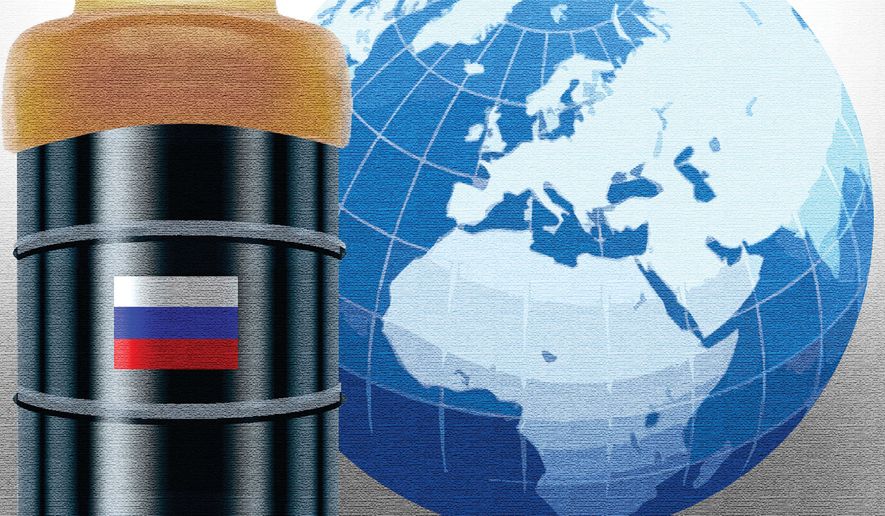
This is clearest in Europe. Take it from Ukrainian President Volodymyr Zelenskyy. After recent meetings with President Trump and U.S. energy industry leaders, he told reporters, “The Americans will, in any case, completely drive out Russian gas from Europe. … Russia has lost Europe to the Americans.”
He is right. Europe now plans to end its reliance on Russian gas by 2027, a year earlier than expected and a remarkable acceleration that reflects the impacts of policies Mr. Trump has long championed.
This tilt back to the U.S. was punctuated over the summer by a flurry of deals, as allies signed long-term agreements with U.S. energy companies. Liquefied natural gas provider Venture Global signed deals with Italy, Germany, Spain, Greece and, most recently, Japan in a matter of months. Such a shift in energy dominance is unprecedented and exceeds what most observers would have expected.
Why is this happening? Mr. Trump recognized early on that America’s energy abundance is not just an economic strength but also a strategic weapon. Europe’s embrace of U.S. firms as partners in energy dominance marks a pivotal shift to a stronger Western alliance in which U.S. energy can secure the West’s freedom from hostile suppliers.
The U.S.-European Union $750 billion trade deal, announced in July, demonstrates how Europe’s search for stable supply is increasingly tied to U.S. production, particularly liquefied natural gas, which has become the backbone of Europe’s diversification away from Russian fuel. For Europe, U.S. energy offers reliability and insulation from geopolitical risk. For the United States, it expands exports, supports jobs and strengthens strategic influence.
Critics questioned whether the deal’s goals were achievable. The Wall Street Journal called them “aspirational,” and Bloomberg said they “look hard to reach.” The LNG sector sustained a setback in 2024 when the Biden administration imposed an export pause, halting progress on several projects. The Trump administration quickly lifted the restriction, and regulators have since prioritized approving projects left in limbo by the previous administration’s decision.
Many of these doubts overlook how quickly the LNG sector has rebounded since the export permit pause was announced. Regulators are clearing long-delayed projects, and new investments are ramping up to meet surging global demand.
That policy shift has already begun to pay off. European offtake agreements are multiplying, and recent supply contracts between U.S. exporters and European utilities show that the commercial groundwork is being laid. Companies such as Cheniere Energy, NextDecade and Venture Global are expanding capacity, helping to anchor Europe’s shift toward trans-Atlantic supply chains.
The benefits extend beyond LNG. European countries are pursuing partnerships with established U.S. nuclear companies, such as Westinghouse, and advanced reactor startups, including Oklo. An American nuclear renaissance that extends across the Atlantic would help Europe diversify energy sources and accelerate decarbonization, echoing the impact of the fracking revolution.
As Europe continues to reduce its reliance on Russian energy, these developments foster deeper diplomatic ties and lessen vulnerability to energy-related coercion.
Although the future of the Russia-Ukraine war remains uncertain, the move away from Russian energy is real and accelerating and could help bring peace closer. The U.S.-EU trade deal, along with the aforementioned agreements, gives America’s allies confidence in long-term commitments and a stronger foundation for collective security. The recent Partnership for Transatlantic Energy Cooperation conference in Athens, co-hosted by U.S. and Greek energy officials, underscored the urgent need for collaboration between government and industry to mobilize investment and accelerate the infrastructure build-out required to reduce Europe’s reliance on Russian energy.
The U.S. remains essential to global energy security, and allies are responding by pivoting away from geopolitical adversaries such as Russia. America is urging Europe to break its dependence on Russian energy and is proving it can deliver a reliable alternative.
Europe is moving decisively toward U.S. energy, and the U.S. is stepping up to deliver. It’s proof that when America leads in energy, its allies follow with confidence.
• Danielle Zanzalari, Ph.D., is a financial economist whose work bridges academic research and real-world policy. She is the assistant professor of economics at Seton Hall University.

Please read our comment policy before commenting.