



OPINION:
The last thing consumers want during a time of soaring interest rates and sky-high inflation is an expensive fashion statement. Electric cars are primarily marketed to individuals anxious that others know they care so deeply about the planet that they’re willing to accept the tradeoffs that come with owning an electric vehicle (EV).
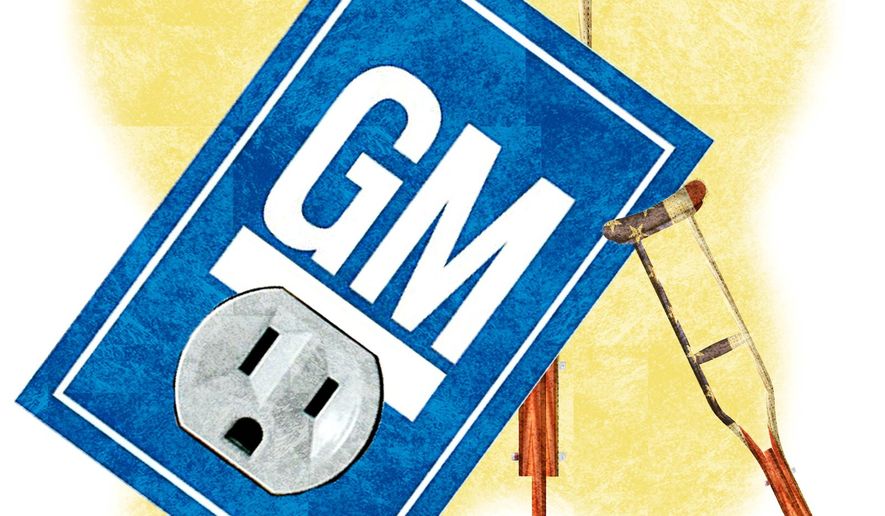
The vast majority of drivers, however, aren’t interested in trading a 5-minute stop for gas for an hours-long roadside charging session. No wonder General Motors CEO Mary Barra told investors last week she was delaying the launch of big new models like the Chevrolet Equinox EV, the Silverado EV RST and the GMC Sierra EV Denali. GM also retracted previously proclaimed production targets as overly optimistic.
“We are not providing new targets,” explained GM chief financial officer Paul Jacobson, “but are moving to a more agile approach to continually evaluate EV demand.” That’s a clever way of pretending that making 2,400 electric Cadillac Lyriq SUVs instead of the 25,000 that had been forecast is all part of the strategy.
It was only last year that the automaker claimed its electric car production would be “solidly profitable” by 2025, touting “software revenue opportunities” and the “positive impacts of new clean energy tax credits.”
By software revenue, some electric car makers have floated the idea of turning optional equipment into recurring subscriptions. Under this dystopian business model, features like heated seats require a separate monthly payment — something nobody wants. While the tax credits are attractive, even the $7,500 Uncle Sam is willing to pay the wealthy to go electric isn’t enough to generate momentum.
And that $7,500 figure is just the most visible manifestation of the government’s involvement in the industry. In May, for instance, state and local authorities in Indiana approved $330 million in tax subsidies for an EV battery factory planned by Ultium Cells, GM’s joint venture with South Korea’s LG.
President Biden’s Inflation Reduction Act cut a blank check to the industry with a provision known as “45X” that the Congressional Budget Office (CBO) estimates will transfer a stunning $30.6 billion in taxpayer cash into the pockets of EV battery makers. Industry analysts at Benchmark Source think the total battery subsidy total could be closer to $150 billion.
There’s even $7.5 billion in federal funding to pay for roadside charging stations. Despite all this, the National Bureau of Economic Research estimated already dismal EV sales would have dropped another 29 percent if the government stopped paying people to buy electric cars.
This is why everything in this country is more expensive these days. Government is taking billions of dollars from productive citizens and handing it to companies engaged in an unprofitable and unwanted business. None of this market manipulation is doing anything to benefit the environment.
According to the Energy Information Agency, 78% of America’s power comes from burning fossil fuels or nuclear power. Solar panels account for a bit over 3%. Twice as many Teslas are powered by burning coal as are powered by windmills, and somehow their owners are still convinced they’re helping save the planet.
The government needs to stop abetting these delusions by exiting the car business. When automakers can come up with an electric offering that’s attractive to the general public, subsidies won’t be needed to convince the public to buy.

Please read our comment policy before commenting.