



OPINION:
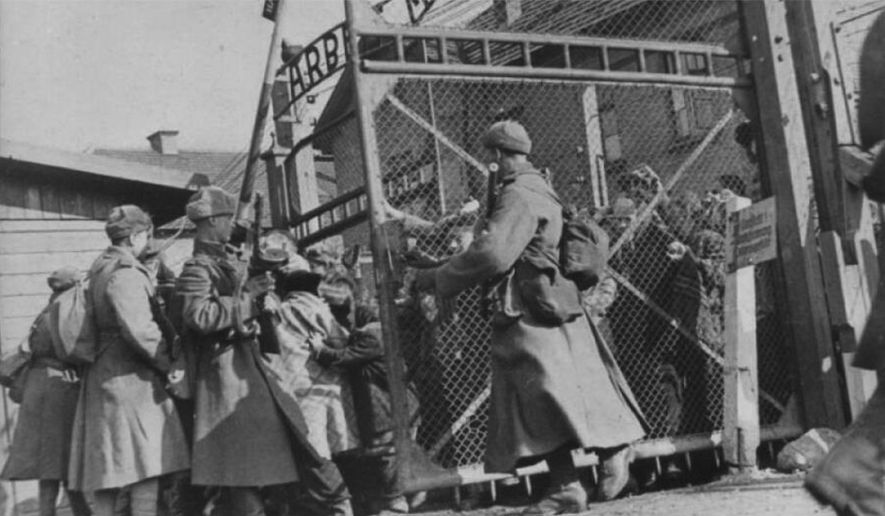
On the International Holocaust Remembrance Day commemorating the liberation of the Auschwitz-Birkenau concentration camp by the Soviet army, as well as on the 78th anniversary of lifting the siege of Leningrad, Russian Ambassador to the United States Anatoly Antonov elaborates on the necessity of preserving the historical truth.
Last year marked the 75th anniversary of the end of the Nuremberg trials. Within more than 300 days of continuous work of the International Military Tribunal established by the coalition of anti-Hitler countries, hundreds of thousands of written witness testimonies, photos and video chronicles were collected. Numerous testaments of the misanthropic essence of Nazis and its proponents were presented to the world. The Soviet and American prosecutors and judges who participated in the trial played a key role in bringing Hitler’s closest henchmen to justice.
Every year the Russian Ministry of Foreign Affairs publishes a report on the global situation with the spread of neo-Nazism. The facts presented in the document indicate that the victory in World War II has not yet eradicated the “brown plague.”
We are currently witnessing a cynical policy of distorting the historical truth. The memorials to victors of fascism are demolished in Ukraine, the Baltic States and Poland. There is a self-evident desire to erase the memory of the deed of the Soviet soldier-liberator, whom they try to put on equal footing with Hitler’s executioners.
It got to the point where some Eastern European countries regularly host marches to honor the punitive S.S. divisions, whose hands were stained with the blood of hundreds of thousands of civilians, including the elderly, women and children.
These disturbing trends affect the United States as well. Belittling the decisive USSR contribution to smashing Nazism and excluding our country from the victors in World War II have become a common practice. There are over 800 active extremist groups in the country, advocating the theory of white supremacy. Their “legitimacy” is justified by the first amendment to the U.S. Constitution that guarantees freedom of speech.
Washington’s stance forces us to recall the tragic lessons of history. In the 1930s the with the same perseverance, the U.S. with other leading Western powers refused to recognize a mortal threat posed by Nazism. A policy of appeasement toward Hitler ultimately turned into a major disaster in the history of mankind.
At the same time Americans still cherish the memory of the comradeship between our nations during World War II. People across the country take part in the annual Immortal Regiment campaign, paying tribute to Soviet and U.S. soldiers who fought shoulder to shoulder against a common enemy.
Events dedicated to the lend-lease programs, which are held in Fairbanks, Alaska, and Elizabeth City, North Carolina, have become a good tradition. They are attended by the representatives of local authorities, historians, veterans and all the interested residents.
Every year on April 25th the Russian Embassy with colleagues from the CIS countries lay wreaths at the National Arlington Cemetery on the occasion of the legendary meeting of Soviet and U.S. Forces on the Elbe River in 1945. Back then, the soldiers of the Allied armies together toasted victory and Russia-USA friendship.
This January we are commemorating the 78th anniversary of lifting the siege of Leningrad. The defense of the city, which lasted 872 days, is considered to be one of the symbols of courage of the Soviet people during the Great Patriotic War.
The city on the Neva River and its entire population were supposed to be subjected to a complete annihilation according to Nazi military directives. Bombings, famine and cold did not spare the elderly, women and children. The horrors of those days associated with the death of relatives and friends were documented in the diary of 14-year-old Tanya Savicheva. Its last passage – “Everybody died. Only Tanya remained” – will forever remain in history. Contemporary historians assume that up to
one million people perished during the siege.
However, despite all Nazi attempts, the Red Army and citizens of Leningrad managed to protect the city disrupting Hitler’s cruel plans. The unshakable spirit of its defenders was immortalized in the famous poem by Olga Berggolts and Symphony No.7 by Dmitri Shostakovich.
The entire world, including the U.S., watched closely as Leningrad fought against the Nazi aggressors. The breach of the blockade was wholeheartedly admired by Americans. President Franklin D. Roosevelt sent a letter to the heroic city in which he mentioned that the deeds of Leningrad’s defenders “symbolized the undaunted spirit of the peoples of the Union of Soviet Socialist Republics and of all nations of the world resisting forces of aggression.”
Our duty to the generation of victors is to remember the lessons of history. The memory of the alliance should help us build genuine partnership relations in the fight against modern challenges and threats.

Please read our comment policy before commenting.