



Kenneth Kurson, a Trump ally pardoned by the former president on his last full day in office, has been charged with felony counts of cyberstalking and eavesdropping by the district attorney for Manhattan.
Cyrus Vance Jr. announced Wednesday that his office charged Mr. Kurson, 52, a friend of former President Donald Trump’s son-in law Jared Kushner, with both counts in New York County Criminal Court.
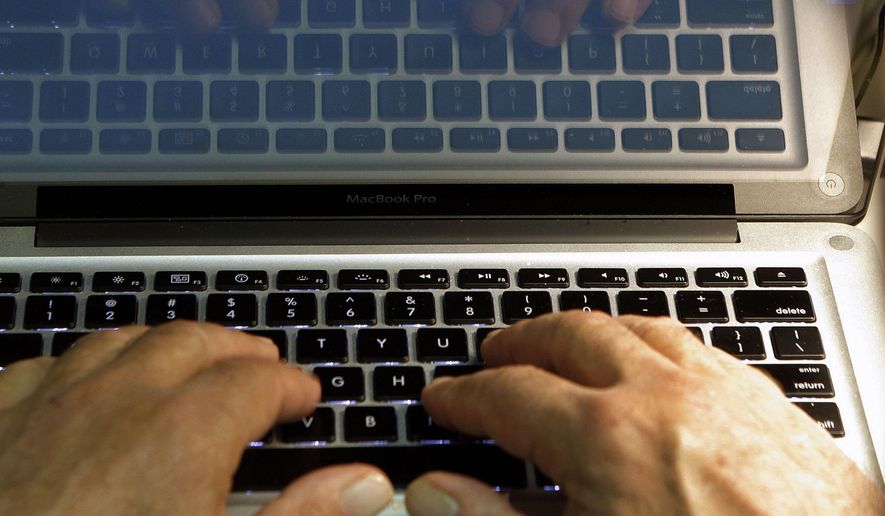
Manhattan prosecutors say Mr. Kurson, the former editor-in-chief of the New York Observer weekly newspaper, used spyware to secretly monitor the computer use of his then-wife in 2015 and 2016. He remotely monitored her keystrokes and obtained the credentials to access her Gmail and Facebook accounts.
Federal prosecutors had accused Mr. Kurson of similar cybercrimes in October 2020, but he was effectively cleared of those charges when Mr. Trump granted him a full pardon three months later on Jan. 19.
The Manhattan District Attorney’s Cybercrime and Identity Theft Bureau started its own investigation within days of Mr. Trump’s pardon, Mr. Vance’s office stated in a news release.
“We will not accept presidential pardons as get-out-of-jail-free cards for the well-connected in New York,” Mr. Vance, a Democrat serving as New York County’s top prosecutor, said about Mr. Kurson.
The district attorney’s office said it obtained records showing Mr. Kurson registered the spyware under his full name and address, as well as his frequent, frustrated communications with customer service.
“It’s not helpful to only see that she went to Facebook – I need to see what she wrote when she was there,” the spyware user complained to customer service on Sept. 25, 2015, according to prosecutors.
“I need to uninstall it PERFECTLY,” the user said the next month, according to a five-page charging document filed this week. “So that not even an expert can detect that it had been there.”
The district attorney’s office said Mr. Kurson told customer support that he was using the software to monitor his daughter.
Prosecutors said Mr. Kurson’s then-wife told police in November 2015 that her spouse was “terrorizing her through email and social media” and that she had malware removed from her computer the next day.
The couple divorced in January 2016, according to The New York Times.
Mr. Trump nominated Mr. Kurson in 2018 to the board of the National Endowment for the Humanities, triggering a routine FBI background check that prompted the federal and state charges.
In late 2020, federal prosecutors in Brooklyn charged Mr. Kurson with cyberstalking for allegedly harassing three people online. A footnote appearing on the criminal complaint notes:
“FBI Special Agents have also obtained evidence revealing that KURSON engaged in a similar pattern of harassment in relation to his divorce proceedings against other individuals between approximately September 2015 and December 2015, including by accessing email accounts and social media accounts without their knowledge or authorization; installing software on one individual’s computer to monitor that individual’s keystrokes and website usage without his/her knowledge or authorization; using aliases to contact their employer and levy false allegations of misconduct, including a false allegation of improper contact with a minor; and using aliases to mail packages to those individuals and their employers.”
Mr. Trump in his pardon said the federal case against Mr. Kurson was politically motivated and that even the woman he is accused of cyberstalking opposed criminal prosecution.
“This investigation only began because Mr. Kurson was nominated to a role within the Trump administration,” the White House said at the time.
Mr. Vance accused Mr. Kurson of conducting a campaign of “cybercrime, manipulation and abuse” and said the people of New York will hold him accountable.
Mr. Kurson was arrested Wednesday and released on his own recognizance. His lawyer, Marc L. Mukasey, did not respond to a request for comment. They are due back in court Sept. 28.
Multiple close friends and allies of Mr. Trump received pardons or commutations from the president during his final week in the White House.
Other individuals granted pardons by Mr. Trump as his administration came to an end include former 2016 campaign members Paul Manafort, Roger Stone and Stephen K. Bannon, among others.
• Andrew Blake can be reached at ablake@washingtontimes.com.

Please read our comment policy before commenting.