


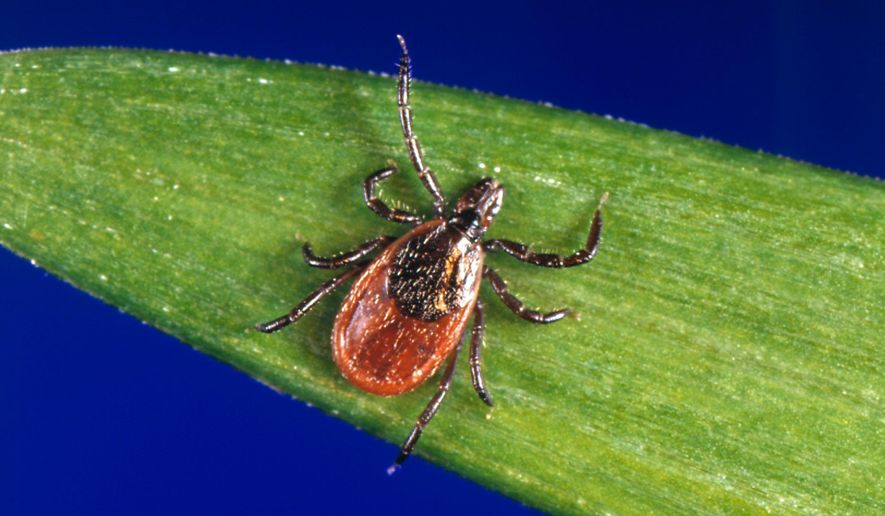

Clothing treated with a synthetic insecticide is effective in preventing tick bites, according to new research that found at least three species of the the disease-carrying insects couldn’t latch on to the material.
In a study published last week in the Journal of Medical Entomology, researchers from the Centers for Disease Control and Prevention found that clothing treated with permethrin “had strong toxic effects on three primary species of ticks known to spread disease-causing pathogens in the United States,” according to a press release.
Permethrin is a synthetic insecticide made from the chrysanthemum flower, native to Asia and Northeastern Europe.
When the ticks were placed on the material, they had trouble moving, became sluggish and fell off the material. The researchers believe this will interfere with their ability to bite.
Diseases from mosquito, tick and flea bites tripled in the U.S. from 2004 to 2016, according to the CDC.
Federal health officials have earlier warned that state and local pest control bodies don’t have enough resources to contain the threat and ticks, especially, can transmit infections like Lyme disease and Powassan disease.
To protect oneself, the CDC recommends taking a number of precautions, which includes using bug spray and wearing long-sleeved shirts and long pants in areas likely to be infested with insects. Even more, the agency recommends buying pre-treated clothing or tents (or treating them yourself) with permethrin.
Earlier research had shown that the insecticide worked well against the blacklegged tick nymph — also called deer tick — and its second stage of growth. It is one of the most common ticks in the Northeast and can transmit Lyme, Powassan, and other infections like anaplasmosis and babesiosis.
For deer tick nymphs that had one minute exposure to permethrin, 100 percent lacked normal movement one hour later.
The latest study, however, showed that the treated clothing also had strong effects on other tick species, although at slightly less levels. This included being 86 percent effective against lone star tick nymphs — widely distributed in the Southeastern and Eastern U.S.; 62 percent effective against deer tick adult females.
• Laura Kelly can be reached at lkelly@washingtontimes.com.

Please read our comment policy before commenting.