


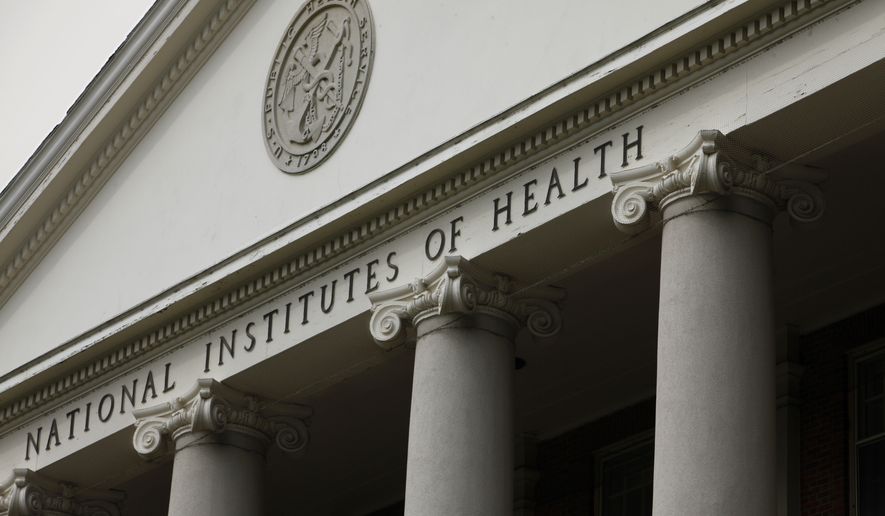

The ambitious precision-medicine project All of Us gets under way next week with the goal of enrolling 1 million Americans of all backgrounds in the largest longitundial health study in the world.
Nearly 15 years in the making, the program is the brainchild of National Institutes of Health director Francis S. Collins, with the goal of creating a truly representative health database that will help inform individualized medical treatments and solutions.
“It’s unprecedented and unique,” Dr. Collins said in a call with reporters Tuesday, adding that the program shifts medical research from determining what works best for the average person to looking at how unique characteristics and environments influence health and disease.
“We are all different, and ’one size fits all’ is far from an optimal strategy,” he said.
Open enrollment will begin online and in seven cities across the country on Sunday, in Birmingham, Alabama; Chicago; Detroit; Kansas City, Missouri; Nashville, Tennessee; New York City; and Pasco, Washington. More details on specific locations are available at launch.joinallofus.org.
At least 26,000 participants are already enrolled in the program, volunteering during a yearlong beta testing process. The ultimate goal is to reach 1 million Americans within five to six years.
People who choose to enroll provide access to their electronic health records, update health assessments — such as blood and urine samples — with a provider and fill out surveys on health habits, where they work and where they live.
“It was all very quick and easy,” said Miriam Guzman, one of the beta volunteers who heard of the program through her job at Northwestern University in Evanston, Illinois.
Ms. Guzman is a Mexican-American and is also living with Type I diabetes and Graves’ disease, an autoimmune disorder that causes an overactive thyroid.
“When I look and find information about diabetes as a patient, I always see an asterisk in research about — oh this is based on European Ancestry. How do I know as a patient, this is relevant to me and relevant to my family?” she said. “I really felt this was an opportunity … that in the future, my children, my grandchildren, people will benefit from the information I provide.”
But with this unprecedented sharing of information — participants also have access to their own data — has created concerns over security and privacy.
“Safeguarding participants privacy and data are our top responsibilities,” said program director Eric Dishman. “If we lose that trust, then we lose the viability of the program.”
Information taken from online surveys and electronic health data are uploaded into a secure cloud platform, Mr. Dishman said. While the data is available to researchers and participants, identifiers and contact information are removed and none of the information will ever be sold to marketers. Officials said they have subjected their system to multiple hack-a-thons — conventions of hackers tasked with breaking in to secure systems — to test its security.
Officials emphasized that law enforcement or legal procedures won’t be allowed to demand identities of participants based on their medical data.
Last week it was revealed that police in California used open-source DNA data on genealogy websites to track and capture the Golden State Killer, believed to be responsible for killing at least 12 people and raping more than 50 women between 1974 and 1986. Police compared DNA from crime scenes to that of a relative found on one of the sites.
“From what I understood about it, that would not happen in this particular case,” Mr. Dishman said.
Volunteers are protected by certificates of confidentiality, which, under the 21st Century Cures Act which was signed into law at the end of 2016, protect their data from being used by federal, state and local government agencies or in a court of law.
“If somehow the data was still obtained, they receive additional immunities and inadmissibility of that data being used against them in legal proceedings,” he said.
This level of security in confidentiality has helped researchers build trust in communities underrepresented in medical research, officials said, of which including them in the study is paramount to the All of Us mission.
“At a high level what we want to have over time is a mix of geographic, medical and demographic diversity,” Mr. Dishman said, with a particular emphasis on people living in rural communities and minority groups related to ethnicity, age, gender, physical and mental disabilities, among others.
Researchers are aiming that between 70 and 75 percent of the cohort is comes from these groups and will make up a large part of future research that will invite participants to have their DNA sequenced, a more expensive and labor intensive procedure but with the possibility to really impact precision medicine.
Mr. Dishman credits DNA sequencing with curing his rare form of kidney cancer, a battle he fought for over two decades. “I am alive and well today thanks to precision medicine,” he said.
• Laura Kelly can be reached at lkelly@washingtontimes.com.

Please read our comment policy before commenting.