


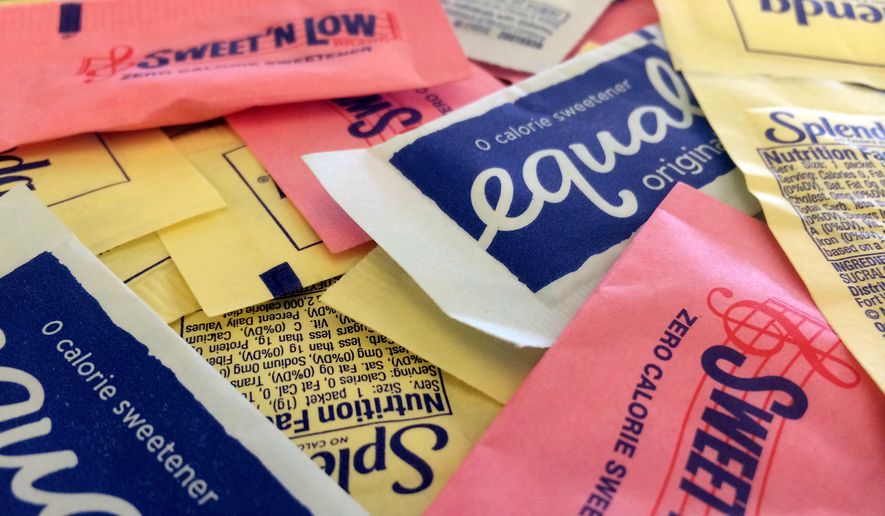

Evidence is building that zero-calorie sweeteners are more harmful than helpful when it comes to America’s obesity and diabetes epidemic, with new research supporting a direct link between sugar substitutes and negative health effects.
High exposure to artificial sweetener can damage blood vessels and destabilize the bodies equilibrium, researchers from Marquette University concluded in a presentation at the American Physiological Society’s annual meeting in San Diego last week.
Researchers alternately treated rats with concentrated dosing of sugar (glucose) and substitutes — aspartame and acesulfame potassium, two chemical compounds popularly found in the branded sweeteners Equal and Sweet One, respectively.
While the rats treated with glucose predictably did worse on a high-sugar diet, the researchers observed biological changes in the rats treated with the artificial sweeteners.
“The negative implications of consuming high amounts of dietary sugar on overall health have long been linked to diabetes, obesity, cardiovascular disease, and other systemic health problems,” the authors wrote in a statement. “However, it was not until recently that the negative impact of consuming non-caloric artificial sweeteners in the place of sugar had been increasingly recognized as a potential contributor to the dramatic increase in diabetes and obesity, along with the associated complications.”
The study was led by Brian Hoffman of the Medical College of Wisconsin at Marquette University.
“We observed that in moderation, your body has the machinery to handle sugar; it is when the system is overloaded over a long period of time that this machinery breaks down,” Mr. Hoffmann said in a statement in March, ahead of his presentation.
“We also observed that replacing these sugars with non-caloric artificial sweeteners leads to negative changes in fat and energy metabolism.”
More than one-third of U.S. adults have obesity, according to the Centers for Disease Control and Prevention, and that number has increased since 1999.
More than 100 million Americans are living with diabetes or pre-diabetes, the CDC said in a report released last year.
Other studies on the impact of artificial sweeteners have looked to examine their impact over time in humans, or on the direct changes to cells in a laboratory.
In March, George Washington University researchers presented findings that consumption of low-calorie sweeteners promoted negative health effects like pre-diabetes and diabetes and led to high blood pressure, high blood sugar, unhealthy cholesterol levels and abdominal fat.
The scientists conducted experiments on how sucralose interacted with stem cells, in addition to studying human fat samples collected from individual with obesity who consumed low-calorie sweeteners.
They injected the cells with the equivalent amount of sweetener seen in someone consuming four cans of diet soda per day and found an increased expression of genes that are markers of fat production and inflammation.
“Our stem cell-based studies indicate that low-calorie sweeteners promote additional fat accumulation within cells compared with cells not exposed to these substances, in a dose-dependent fashion,” said Dr. Sabyasachi Sen, associate professor of Medicine at George Washington University. “As the dose of sucralose is increased more cells showed increased fat droplet accumulation. This most likely occurs by increasing glucose entry into cells through increased activity of genes called glucose transporters.”
Dr. Sen and his colleagues presented their findings in March at ENDO 2018, an annual endocrinology conference, in Chicago.
Other research includes a retrospective study from scientists at the University of Manitoba, which found an association between sugar substitutes and negative health effects. The study found that among dozens of studies with over 400,000 participants, consumption of artificial sweeteners was positively associated with weight gain and diabetes.
“It was kind of surprising that looking at all the evidence out there there was no clear benefit of these artificial sweeteners, yet there was evidence for harmful effects in the long-term consumption,” Meghan Azad, research scientist at the University of Manitoba and lead author of the study, told The Washington Times. “But I think, for the average person, including myself, it is surprising that you see links between the artificial sweeteners and increased weight gain and increased diabetes, because those are the exact things people are trying to avoid by taking them in many cases.”
• Laura Kelly can be reached at lkelly@washingtontimes.com.

Please read our comment policy before commenting.